
What is plantar fasciitis? Symptoms and causes
Foot Health
Learn what plantar fasciitis is, what its main symptoms are and which risk factors make it more likely to develop.
Heel pain is one of the most typical symptoms of plantar fasciitis. Even so, not all pain in that area means you have it. Here's what plantar fasciitis is, what its main symptoms are and which factors make it more likely to develop.
In this article
- What is plantar fasciitis?
- Plantar fasciitis symptoms
- How to tell if you have plantar fasciitis
- Causes of plantar fasciitis
What is plantar fasciitis?
Plantar fasciitis occurs when the plantar fascia, a band of tissue that runs along the bottom of the foot from the heel to the toes, becomes irritated or inflamed, causing pain mainly around the heel.
The plantar fascia helps support the arch of the foot and plays a role in every step, which means it takes on load every time we walk, run or spend time standing. When this band of tissue is repeatedly overloaded, plantar fasciitis can develop. That's why it's more common in people who do high-impact sports such as running, who work on their feet for long hours or who are overweight.
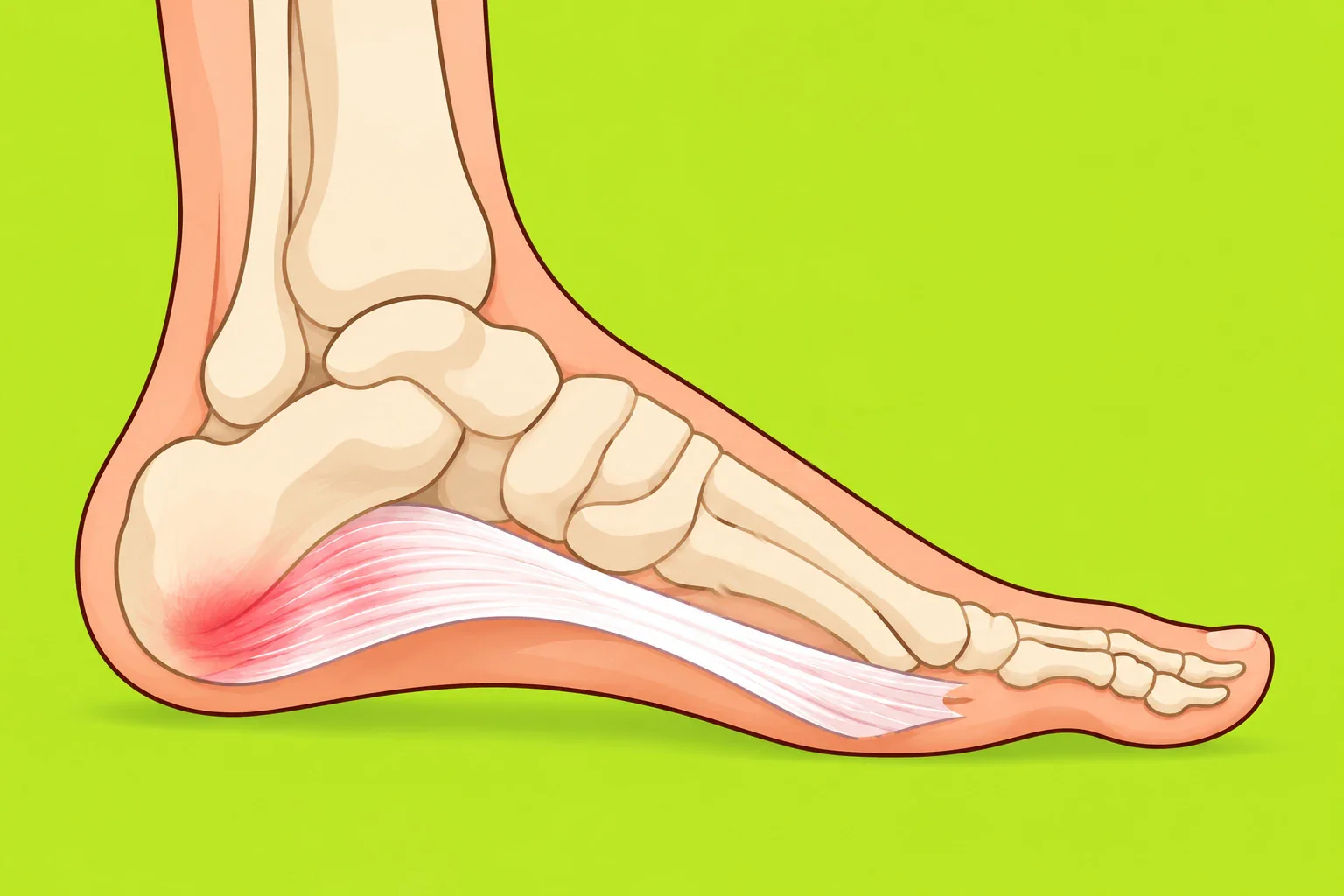
Plantar fasciitis symptoms
The main symptom of plantar fasciitis is heel pain, especially on the inner side of the foot. It's also common to feel discomfort or tenderness in the arch of the foot, or even a feeling of stiffness in the sole.
At first glance, these may seem like fairly general symptoms, but one of the keys to recognizing plantar fasciitis is when the pain appears. The most common times are:
- With your first steps in the morning, right after getting out of bed, which is usually when the pain feels most intense.
- After sitting or resting for a long time.
- After spending many hours on your feet.
- During or after exercise.
It's also very common for the pain to be worse after a period of rest and to ease once you start walking. This happens because the fascia is tighter after you've been still and gradually loosens up as you move.
If your symptoms sound like plantar fasciitis, check out our guide How to treat plantar fasciitis: treatment options and advice.
And if you'd like to start with one of the simplest ways to ease the pain, you can also read Plantar fasciitis exercises: stretches and an at-home routine.
How to tell if you have plantar fasciitis
If the pain is concentrated in your heel, is especially bad when you get up or after sitting for a while, and eases a bit once you start walking, it fits fairly well with plantar fasciitis.
That said, not all heel pain is plantar fasciitis. It's best to let a healthcare professional identify it based on your symptoms and an examination of your foot.
If the pain doesn't follow this pattern, is very severe, comes with tingling or numbness, or doesn't improve over time, it's a good idea to get it checked to rule out other causes.
Causes of plantar fasciitis
There's rarely a single cause behind plantar fasciitis. It most often develops when the plantar fascia takes on more load than it can handle over a period of time, whether due to an increase in activity, long hours on your feet or a combination of several factors.
The main causes and risk factors linked to plantar fasciitis include:
- More physical activity: running longer distances, training harder or getting back into sports after a break suddenly increases the load on the foot.
- Standing for many hours: especially when combined with a lot of walking or working on hard surfaces.
- Being overweight: a higher body weight places a constant extra load on the feet and is one of the factors most clearly associated with plantar fasciitis.
- Sports with repeated impact: running, jumping or playing sports in which the foot takes constant impact increases the work the fascia has to do.
Flat feet, high arches, pronation, ankle mobility and the type of footwear are also often linked to plantar fasciitis, but the evidence here is less clear. They may influence how load is distributed, but it hasn't been shown that any of them, on their own, causes plantar fasciitis.
In short, there's no single cause: it usually develops through a combination of load, habits and individual characteristics.
Looking for extra heel support?
Footgel Plantar Fasciitis gel insoles combine arch support with enhanced cushioning. They help relieve heel pain and reduce strain on your feet, knees and lower back.
- Tested by UMANA Biomecánica
- Made in Spain